Contractions as waves: what surfing teaches us about labour

If the pain of contractions still frightens you, I want to share with you an image that came to me a few days ago, in a session, and that I think is very helpful for looking at them differently.
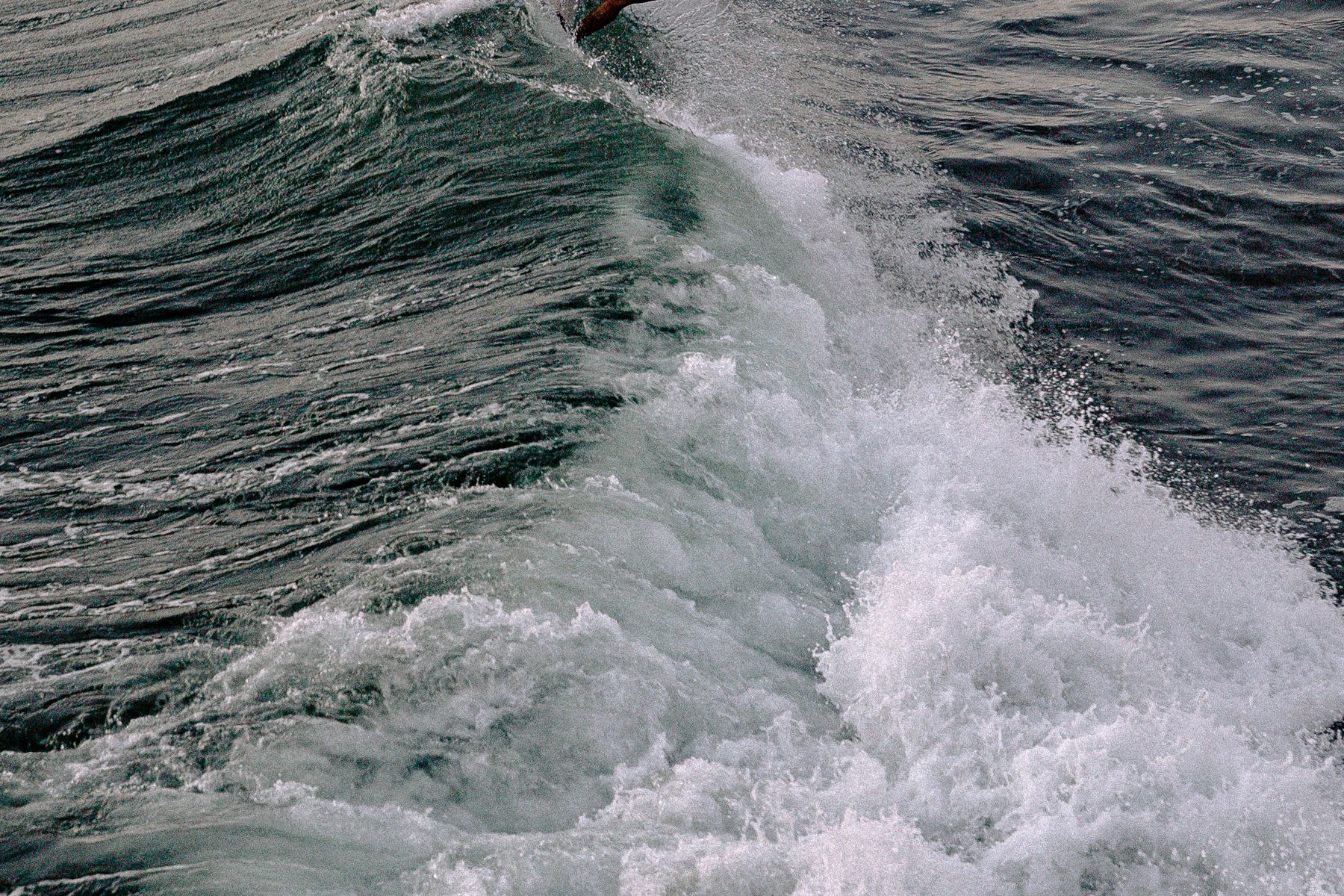
I have two surfers in the family, I am supporting several couples who surf and I spend a lot of time looking at the sea. So it is no surprise that it was the sea that lent me this comparison between contractions in labour and waves.
A contraction is a wave
A contraction, like a wave, has a beginning, grows in intensity, reaches a peak and loses strength until it disappears. And between one and the next there is a break, when the body can rest.
This break is often forgotten when people talk about pain in labour. But it is precious: it is where you breathe, drink water, change position, look at your husband, recover. Labour is not continuous pain, it is a rhythm of wave and pause.
You don't need to feel ready to go into the sea. You need to know you will have company when you do.
The waves change as labour goes on
Some waves are further apart and less intense, others more frequent and more intense. The same happens in birth, and that is what distinguishes the stages of labour. According to the World Health Organization recommendations for a positive childbirth experience, the active phase usually begins at around 5 centimetres of dilation, and the length of each phase varies greatly from woman to woman.
| Early (latent) phase | Active phase | |
|---|---|---|
| The waves | Further apart and less intense | More frequent, longer and more intense |
| Dilation | Up to about 5 cm | From about 5 cm to full dilation |
| Length | Very variable, can last hours or days | Variable, usually more predictable |
| What usually helps | Carrying on calmly, resting, eating, distracting yourself | Living wave by wave, breathing, changing position, continuous support |
Early labour: getting through the swell
In early labour, you can get through the swell with breathing and movement, and carry on calmly in between. It is a good time to be at home, eat something light, have a warm bath, sleep if you can. Many women coming from a difficult first birth use up too much energy here, afraid of what is to come. Knowing that this stage can be long, and that this is normal, helps a great deal.
Active labour: living wave by wave
Active labour asks something more of us: to live wave by wave. Not to think about the fifty contractions still to come, but only about this one, and then the next. This is where the presence of those beside you makes all the difference, with a hand on your back, a word, a sip of water in the break.
What happens when we fight the waves
The surfer who fights the sea gets tired, runs out of breath, and getting “out back” starts to seem impossible. In birth, tension and fear tend to heighten the perception of pain, and letting the wave pass through us is usually more helpful than resisting.
Ways to let the wave pass
- Breathing slowly, lengthening the out-breath.
- Releasing your shoulders, jaw and hands.
- Changing position and letting your body seek movement.
- Using warm water, in a bath or shower.
- Hearing a familiar voice reminding you that this wave will pass too.
None of this makes the pain disappear, but how we face it can change how we feel it. Moving through a contraction with awareness is very different from living it in resistance.
You get to know the sea by going into it, and pregnancy teaches too
I know it is easier said than done, and that is exactly why this path should begin during pregnancy, rather than being saved only for the day of the birth. It is true that you only truly know the sea when you go into it, just as you only know birth by living it. But pregnancy can be a time to discover yourself, exploring the world of sensations and emotions at your own pace.
This is what we do in the stages of doula support in pregnancy, and it is also why thinking beforehand about your birth scenarios can bring you so much calm.
Tools for each stage of labour
Just as a surfer chooses a board to suit the waves, in birth there are tools that make more sense at each stage. None is compulsory, and what helps you may change over the hours. The important thing is to know several options before the day, so you do not have to invent them in the middle of a contraction.
| Stage | Tools that usually help | Your husband's role |
|---|---|---|
| Early labour | Resting, eating, walking, a warm bath, distraction | Protecting rest and handling the logistics |
| Start of active labour | Slow breathing, birth ball, changing position, music | Timing the contractions and offering water |
| Advanced active labour | Warm water, lower back massage, a calm voice, a dark room | Being present, with few words and a lot of calm |
| Pushing stage | Upright or side-lying positions, following your body's urges | Reminding you that you are nearly there, and that you can do it |
When fear of pain comes from the first birth
For many women, fear of contractions is not abstract: it comes from a first birth in which pain was lived with fear, alone, or without understanding what was happening. In that case, pain becomes linked to threat, and the body gets ready to fight. That is understandable, and it is not your fault.
The work we do in pregnancy often involves separating one thing from the other: pain as a bodily sensation, with a beginning and an end, and the fear left over from the first birth, which deserves to be heard on its own. When we make sense of what happened, the waves of the next birth usually stop looking like a tsunami.
The pain of a contraction has a beginning and an end. The fear you carry from your first birth deserves to be heard on its own.
Pain relief is part of the conversation too
Knowing the stages and the tools does not mean you have to do without an epidural or other forms of pain relief. Asking for relief is a legitimate choice, and deciding about it with information is part of experiencing the birth as your own. It is worth asking your team what options exist where you will have your baby and at what point they can be used.
The ULS Santa Maria in Lisbon explains in its labour ward leaflet (in Portuguese) that labour usually takes a while but rarely goes beyond 24 hours, and suggests bringing music or something to help pass the time.
Frequently asked questions about contractions
How do I know if I'm in active labour?
Usually, contractions become regular, longer and more intense, and you can no longer talk or distract yourself during them. The team confirms it, but your body usually gives clear signs.
How long does early labour last?
It varies a great deal. It can last a few hours or stretch over more than a day, especially with a first birth. Knowing this helps you save energy.
Is asking for an epidural giving up?
No. It is one of the forms of pain relief available, and choosing it with information is as legitimate as choosing any other.
That is what I'm here for
During pregnancy and on the day of the birth, I am beside you and your husband, so that you go into the sea together and with company. If you would like to talk about how we could walk this path together, book your free information session.
Trusting the body’s wisdom. 🤍
Published on 21 November 2026. Last updated on 23 November 2026.


